Golf cart battery cables: gauge, lengths and lug sizes by make
A green, stiff battery cable will make a brand-new set of batteries feel three years old. Replacing the set is a $40 to $100 job that takes an hour, as long as you buy the right gauge, the right lengths and pure copper.
We pick from published specs, maker instructions and what owners report. We may earn a commission from links on this page; it never changes what we recommend. How we choose
Key takeaways
- Buy 4 AWG pure copper cables cut for your make, or 2 AWG if the controller has been upgraded.
- Replace every cable at once; one new cable in a corroded set fixes nothing.
- Battery lugs need 5/16-inch holes; controllers and motors are sometimes 3/8, so check before ordering mains.
- Skip copper-clad aluminum: a 4 AWG CCA cable behaves like 6 AWG copper and heats up.
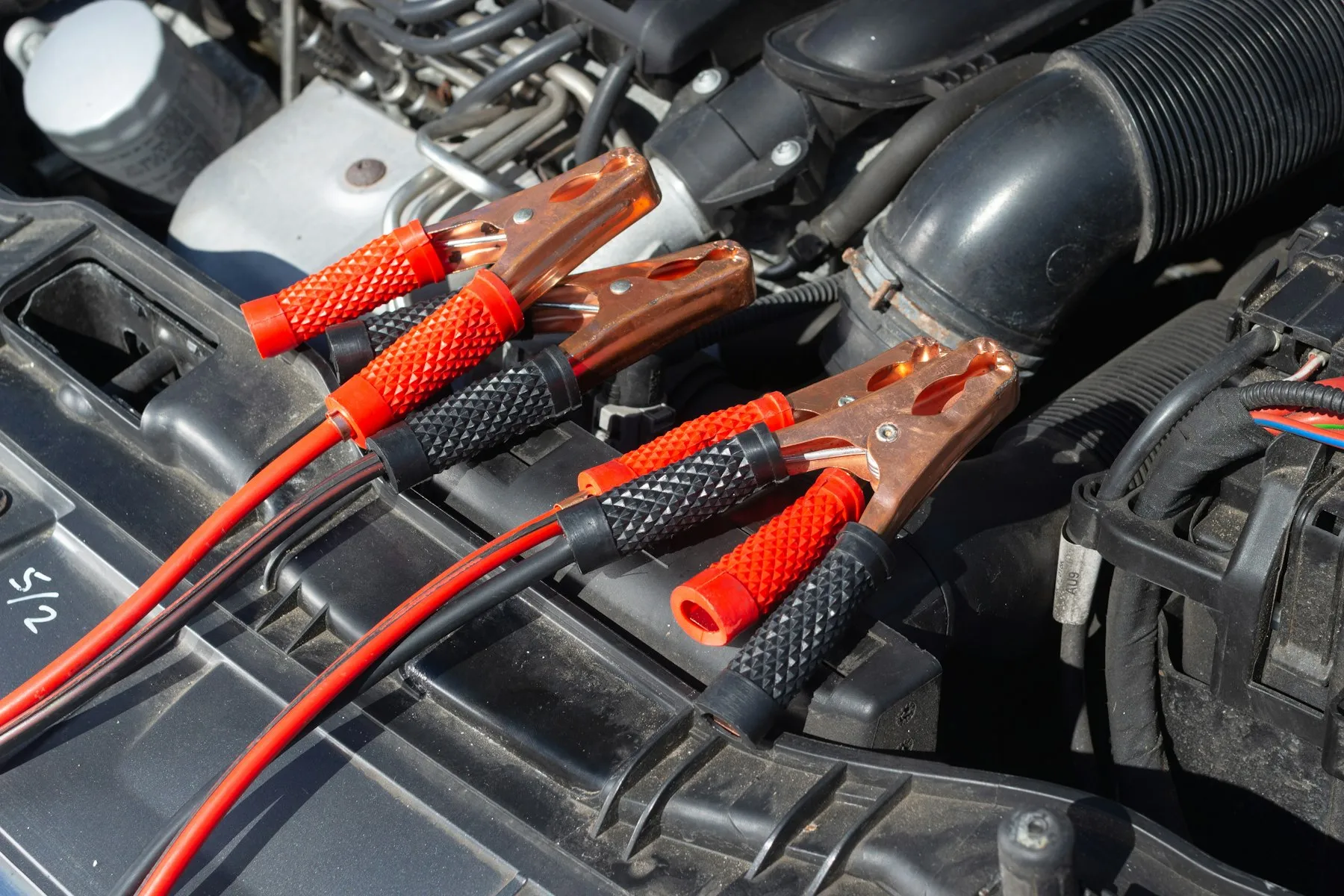
Our picks at a glance
Prices are estimates as of Oct 17, 2026
- 1Best for stock carts4 AWG make-specific battery cable setSold by make and model: Club Car DS and Precedent, EZGO TXT and RXV, Yamaha Drive and G-series; buy the set for your battery layoutabout$35–$70
- 2For upgraded controllers and motors2 AWG battery cable setAny cart with a 400A or larger controller, a high-torque motor or a lifted cart on big tires; also a worthwhile upgrade on any 48V cartabout$55–$110
- 3Factory-style replacementOEM-style battery cable set from Buggies UnlimitedClub Car, EZGO and Yamaha by model and yearabout$40–$90
- 4Do not forget the hardwareBattery terminal bolt and anti-corrosion washer kitAny flooded golf cart battery with 5/16 stud or combination terminalsabout$8–$25
The picks in detail
1.4 AWG make-specific battery cable set
4 AWG pure copper, tinned lugs, 5/16-inch holes, five to nine cables cut to the factory lengths
Fits: Sold by make and model: Club Car DS and Precedent, EZGO TXT and RXV, Yamaha Drive and G-series; buy the set for your battery layout
At Amazon. We may earn a commission.
Pros
- Cut to factory lengths, lugs crimped and sealed
- Right gauge for a stock controller
Cons
- Long main cables usually sold separately
- Each battery layout needs its own set
Why we picked it
A make-specific set is cut to the factory lengths with lugs already crimped and sealed, so you lay each cable where the old one was and bolt it down. 4 AWG is right for a stock controller and motor. The sets include the short jumpers between batteries; the long main cables to the solenoid and controller are usually sold separately or reused.
Before you buy: Count your batteries before ordering. A six-8V set and a four-12V set have different cable counts and lengths.
2.2 AWG battery cable set
2 AWG pure copper, heavy-wall lugs, 5/16 or 3/8-inch holes
Fits: Any cart with a 400A or larger controller, a high-torque motor or a lifted cart on big tires; also a worthwhile upgrade on any 48V cart
At Amazon. We may earn a commission.
Pros
- Carries about 60 percent more current
- Required for 400A and larger controllers
- Cooler terminals even on a stock cart
Cons
- Bulky lugs can touch tight EZGO hold-downs
- Costs more than a 4 AWG set
Why we picked it
Two sizes heavier than stock, 2 AWG carries about 60 percent more current for the same voltage drop. If you have fitted a 400A or 500A controller, this is required, not optional; the cables are the weak link that heats up. On a stock cart it still buys a slightly firmer hill climb and cooler terminals. The lugs are wider, so check they clear the battery hold-downs.
Before you buy: 2 AWG lugs are bulky. On a tight EZGO tray, two lugs on one post can touch the hold-down bracket; use the angled lugs if offered.
3.OEM-style battery cable set from Buggies Unlimited
6 or 4 AWG depending on model, cut and terminated to the original specification
Fits: Club Car, EZGO and Yamaha by model and year
At Buggies Unlimited. We may earn a commission.
Pros
- Listed by model and year
- Includes the main cables as a matched set
Cons
- Some factory sets are only 6 AWG
Why we picked it
If you want the cable set that matches what came out, this is the path. The listings are by model and year, the lengths are right, and you also get the main cables to the solenoid, controller and motor as a matched set, which the generic listings often leave out. Buy the terminal hardware and the anti-corrosion washers at the same time.
Before you buy: Some factory sets are 6 AWG. Step up to 4 AWG unless you are keeping the cart strictly original.
4.Battery terminal bolt and anti-corrosion washer kit
5/16-inch stainless or zinc bolts, nuts and flat washers, with felt anti-corrosion washers, for six or eight batteries
Fits: Any flooded golf cart battery with 5/16 stud or combination terminals
At Buggies Unlimited. We may earn a commission.
Pros
- Fresh hardware for every post
- Felt washers soak up acid mist
Cons
- Plain steel versions rust within a season
Why we picked it
The old terminal bolts are usually as corroded as the cables and a rounded nut will stall the job. A kit gives you fresh hardware for every post plus the felt washers that soak up acid mist before it reaches the lug. Cheap, and it saves a second trip.
Before you buy: Stainless is best against acid; plain steel hardware rusts within a season.
Buy 4 AWG pure copper golf cart battery cables in a set cut for your make, or 2 AWG if you have upgraded the controller or motor. Match the lug holes to your terminals, which is 5/16 inch on the batteries and sometimes 3/8 at the controller, and replace all of them at once; one new cable in a corroded set fixes nothing.
Cables are the cheapest part of a cart’s battery system, and their faults are the ones most often blamed on the batteries. A cart that is slow on hills with a healthy pack usually has a bad connection somewhere in the string, and the testing page shows how to prove it. If you are also deciding between a new flooded set and lithium, the battery calculator runs that math.
Gauge: 4 AWG for stock, 2 AWG for upgrades
Cable gauge runs backward: the smaller the number, the thicker the copper. Golf carts came from the factory with 6 AWG or 4 AWG jumpers between batteries and 4 AWG main cables from the pack to the solenoid, controller and motor. Trojan and the cart makers both treat 4 AWG as the right size for a stock 48V or 36V cart, and that is what to buy.
A stock controller pulls 250 to 300 amps for a second or two on a hard start and far less cruising. 4 AWG copper handles that with a small voltage drop over the two or three feet involved. Upgrade to a 400A or 500A controller, add a high-torque motor, or lift the cart onto 23-inch tires, and the current goes up while the cable stays the same. That is when you go to 2 AWG, which has about 60 percent more copper and runs cooler. Many owners go to 2 AWG on a stock cart as cheap insurance; nothing is lost by it except a little room around the posts.
Do not go the other way. 6 AWG is marginal on a 48V cart under load, and the heat it makes at the lugs is what turns connections green.
Lengths by make
Every cart has a set of short jumpers between batteries and two or three long main cables. Jumpers are mostly 9 to 12 inches; the long ones that cross the tray are 18 to 24 inches; the mains to the solenoid and controller run 24 to 48 inches depending on the cart. Cutting cables to length yourself works but the crimp is where most homemade cables fail, so buy a pre-made set unless you own a proper hydraulic crimper.
| Cart | Battery layout | Jumpers in the set | Notes |
|---|---|---|---|
| Club Car DS 1995 and later | Six 8V | Five | One long jumper crosses the tray; the negative main passes through the on-board computer ring on carts with an OBC |
| Club Car Precedent mid-2008 and later, Onward, Tempo | Six 8V | Five | Batteries sit three a side; two longer jumpers connect the rows |
| Club Car Precedent 2004 to mid-2008 | Four 12V | Three | Electronics sit between the batteries; order the early-Precedent set |
| EZGO TXT to 2009 | Six 6V | Five | 36V; short tray, mostly 9-inch jumpers |
| EZGO TXT48 2010 and later | Six 8V | Five | Similar to the 36V TXT; confirm the year when ordering |
| EZGO RXV | Four 12V | Three | Fewer cables, tight tray; angled lugs help. A cart converted to the six-battery tray needs a six-8V set |
| Yamaha G19, G22, Drive, Drive2 | Six 8V | Five | Standard set; most 2007 to 2010 Drives have four 12V and take a three-jumper set |
| Yamaha Drive, Drive2 with the long-range tray | Eight 6V | Seven | Most cables of any cart; batteries in two rows of four |
| Yamaha G14, G16 | Six 6V | Five | 36V |
Order the set by make, model and year and the lengths will be right. The 48 volt diagram shows which cable goes where for each layout, and the fitment pages for Club Car, EZGO and Yamaha have the serial plate details if you are unsure of the year.
Lug sizes: 5/16 and 3/8
Golf cart batteries use a 5/16-inch stud terminal, or a combination post with a 5/16 threaded hole, so jumper lugs need a 5/16 hole. Most solenoids are 5/16 as well. Controllers and motors vary: some are 5/16, many are 3/8. Look at the posts on your controller and motor before you buy the main cables, or buy a set that includes both hole sizes.
A 3/8 hole on a 5/16 stud works with a washer but puts less copper against the post. A 5/16 hole will not go over a 3/8 stud at all. Get it right once.
Copper against copper-clad aluminum
Pure copper is what you want, and tinned copper is better still because the tin resists the acid mist that sits over a flooded pack. Copper-clad aluminum, sold as CCA, is an aluminum core with a copper skin. It carries about 60 percent of the current of pure copper at the same gauge, so a 4 AWG CCA set behaves like 6 AWG copper and heats up under load.
CCA is lighter and cheaper, and that is how you spot it. A 4 AWG copper cable about 12 inches long weighs around 4 ounces; a CCA one is noticeably lighter in the hand. The listing should say “pure copper” or “OFC”. If it says nothing about the conductor, assume CCA.
Look at the lugs too. Good sets have tinned copper lugs crimped with heat-shrink over the joint. Bare brass lugs with a loose crimp are where corrosion starts.
How to replace golf cart battery cables
About an hour for a six-battery cart. Have the new set laid out and matched to the old ones before you start.
- Photograph the pack from above so you have the routing. Set a Club Car or RXV Tow/Run switch to Tow. Unplug the charger.
- Remove the main negative cable from the battery first, then the main positive. Then remove the jumpers one at a time, swapping each for its new cable as you go, so the string is never confused. Keep the orientation shown in the diagram.
- Clean each terminal with a baking soda and water paste and a brass brush until the lead is bright. Rinse, dry.
- Fit the new cable with the lug flat on the terminal, then the washer and nut. Torque to about 8 foot-pounds, which is Trojan’s spec; more than that strips lead posts, less lets the lug work loose and arc.
- Coat each terminal with a battery terminal protector or a thin smear of dielectric grease. Replace the main positive, then the main negative, last.
- Switch back to Run, charge fully, and after the first drive feel every lug. A warm one needs retightening.
On Club Car carts with the on-board computer (DS from 1995, and Precedent through the early 2010s), the main negative cable must pass through the sensing ring on the OBC. If it does not, the charger will not start. The charging page covers that symptom.
When to stop and call a shop
If a cable has melted insulation or a lug that has burned blue, the cause is upstream: a failing solenoid, a controller fault or a battery with a shorted cell. New cables will burn the same way. If the cart has a lithium pack, do not open the pack’s own terminals; call the maker.
Questions owners ask
What gauge are golf cart battery cables?
Most carts came with 6 or 4 AWG jumpers and 4 AWG main cables. 4 AWG is the right replacement for a stock cart. 2 AWG is for upgraded controllers, high-torque motors and lifted carts on big tires, or for anyone who wants extra margin. Smaller numbers are thicker cable.
Can I reuse my old battery cables with new batteries?
If they are flexible, the insulation is intact and the lugs are bright metal, yes. If there is green or white crust on the lug, the cable is stiff near the end, or the insulation is cracked, replace them. Corrosion creeps up inside the insulation where you cannot see it, and that is where the voltage drop lives.
What size are the terminal bolts?
Golf cart batteries use a 5/16-inch stud or a combination post that takes a 5/16 bolt, so cable lugs need a 5/16 hole. Solenoid and controller posts are usually 5/16 too, but some controllers and motors use 3/8; check before you order the main cables. Torque the battery terminals to about 8 foot-pounds.
Is copper-clad aluminum cable OK for a golf cart?
No. Copper-clad aluminum carries about 60 percent of the current of pure copper at the same gauge, so a 4 AWG CCA cable behaves like a 6 AWG copper one. It is lighter and cheaper, and that is the giveaway. If a 4 AWG set is noticeably light or cheap, read the listing for the word aluminum.
Why does my cart lose power on hills even with new batteries?
A bad cable or a corroded connection drops voltage under load and heats up. Run the cart up a hill, then feel each terminal and lug; a warm one is the fault. The battery testing page covers the other possibilities.
Not sure it fits your cart?
Pick your make, model and year. We'll tell you the voltage and which parts fit.
Keep reading
All batteries guides
48 volt golf cart battery diagram: six 8V, four 12V, eight 6V
Every 48V cart wires its batteries in series. The main positive cable goes to the positive post of battery one, the negative of battery one goes to the positive of battery two, and so on, with the negative post of the last battery taking the main negative cable. Six 8V, four 12V and eight 6V all follow that rule; only the count and the physical layout change.
How-toUpdated Nov 5, 2026
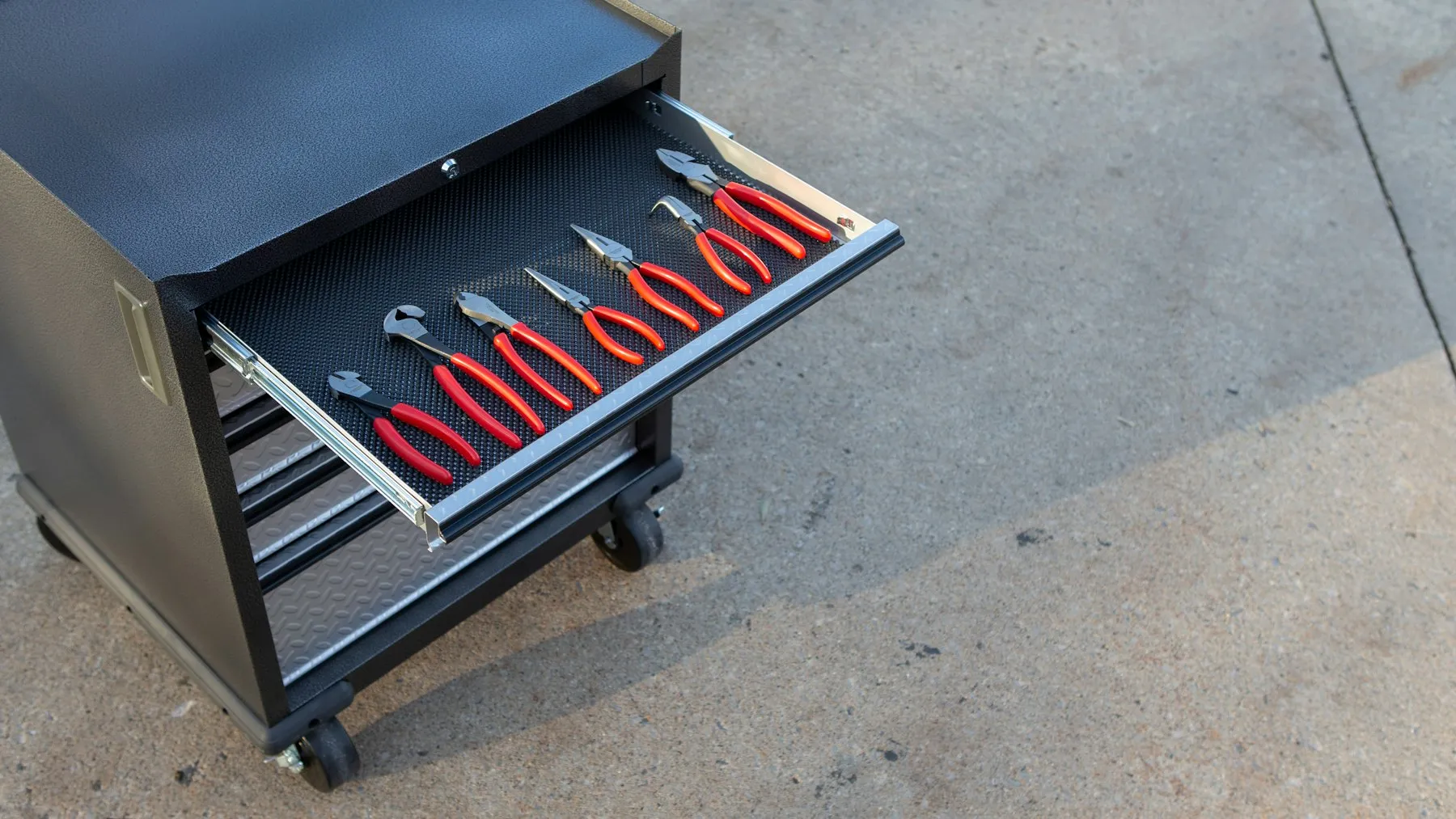
Golf cart battery maintenance: the monthly routine
Once a month, after a full charge, top each cell up with distilled water to about a quarter inch below the fill well, clean any crust off the terminals with baking soda and water, check that every cable lug is tight and bright, and run an equalize charge if your charger offers one. That routine is the difference between three years and six from a flooded set.
How-toUpdated Nov 5, 2026
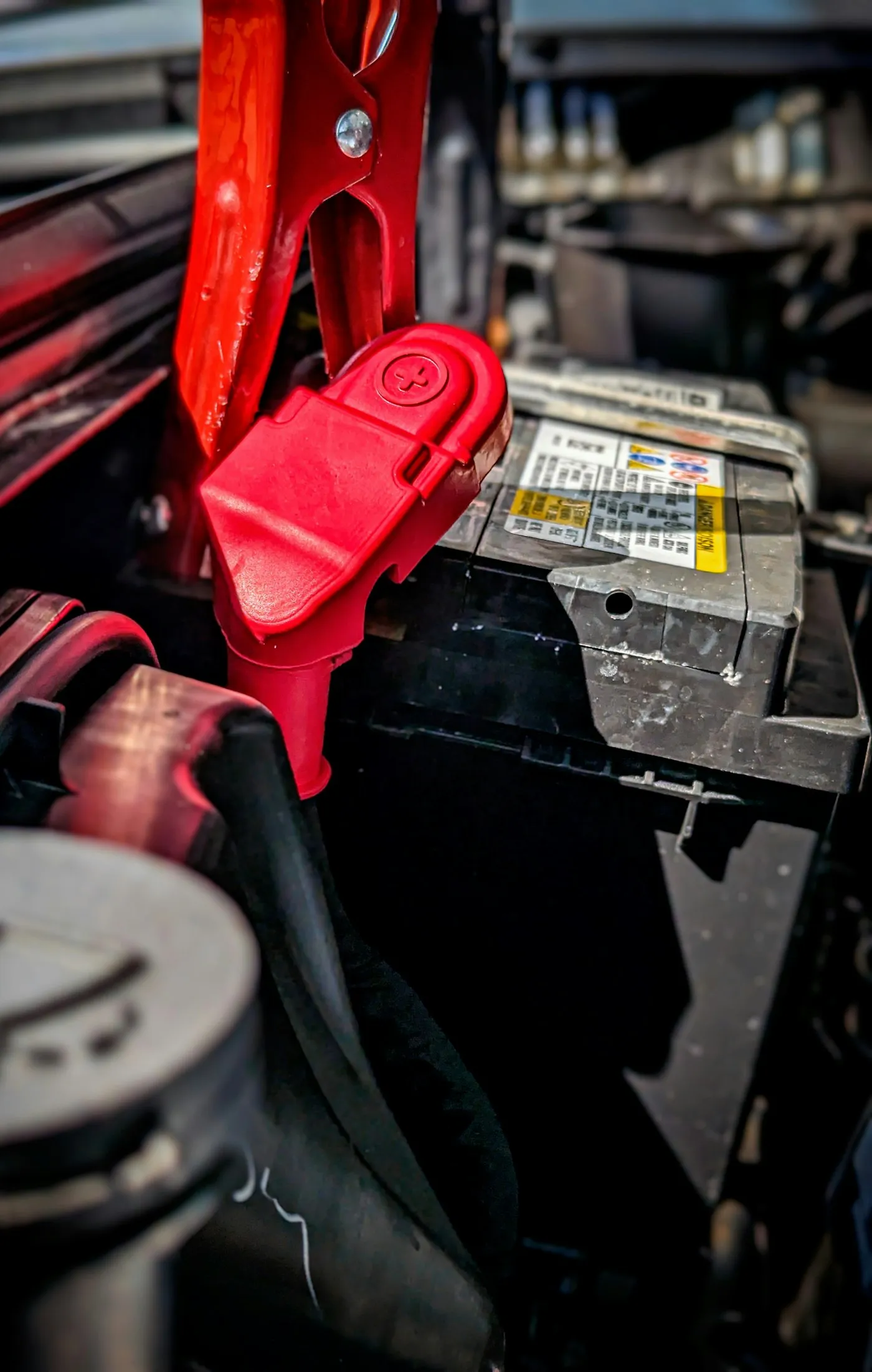
How to test golf cart batteries: multimeter, hydrometer, load test
Charge the pack fully, let it rest an hour, then read each battery with a multimeter: a 6V should show about 6.3V, an 8V about 8.4V, a 12V about 12.7V. A battery more than 0.3V below its neighbors is the suspect. Confirm with a hydrometer (flooded) or a load tester before you buy anything.
How-toUpdated Nov 5, 2026