Golf cart owner guides
Before you buy parts you need to know what the cart is worth, where you can legally drive it and whether it fits the garage. These pages answer the questions that come up before the seat gets flipped up.
Updated Nov 5, 2026 Every pick names the carts it fits
Our top picks in owner guides
The first pick from each buying guide. Open the guide for the alternatives and the reasons.
- The upgrade that moves the price most
Eco Battery 48V lithium pack
From our guide: How much is a golf cart
Fits: Any 48V Club Car, EZGO or Yamaha; check the tray size for your model
about$1,600–$2,600Details - The one part every ordinance mentions
Retractable golf cart seat belt kit
From our guide: How old do you have to be to drive a golf cart
Fits: Any cart with a bench seat and a steel frame to bolt to; two-seat and four-seat kits
about$30–$120Details - Bring this
Digital multimeter, auto-ranging
From our guide: Used golf cart checklist
Fits: Every cart
about$20–$60Details - Covers most ordinances in one box
Golf cart street legal light kit with turn signals, horn and brake lights
From our guide: Can you drive a golf cart on the road
Fits: Model-specific kits for Club Car DS and Precedent, EZGO TXT and RXV, Yamaha G-series and Drive; check voltage and year
about$180–$450Details
Which guide do you need?
Find your situation, then follow the link.
- How much is a golf cartFirst-time buyers pricing new, used and lithium carts$3,000 used to $25,000 LSVRead guide
- Used golf cart checklistBuying from a course, a dealer or a drivewayWhat to check and what to payRead guide
- How old to drive a golf cartParents and grandparents in cart communitiesOwner's call off road, licensed on itRead guide
- Do you need a licenseAnyone leaving private propertyUsually yes on a public streetRead guide
- Can you drive on the roadOwners in towns with a cart ordinanceWhich roads, which hours, what gearRead guide
- How much does a golf cart weighTowing, trailers, ramps and lifts600 to 1,800 lb by typeRead guide
- Golf cart dimensionsGarages, trailers, covers and enclosuresAbout 4 ft by 8 ft by 6 ftRead guide
Price ranges are estimates as of Oct 17, 2026.
How to choose
Every page on this site assumes you already own the cart and are standing over it with a question about batteries or tires. These guides are for the step before that: what a cart costs, whether you can put a grandchild in the driver’s seat, which streets you can take it on, and whether it fits on the trailer. They also happen to be where most of the parts questions start.
Price is mostly a battery question
The spread between a fleet cart at about $3,500 and a refurbished one at about $7,000 is new batteries, a seat cover, paint and a set of tires, which is about $2,000 in parts and a weekend. How much a golf cart costs lays out the ranges for used, refurbished, new gas, new electric and lithium carts, and the used golf cart checklist is the list to bring to a driveway so you know which of those you are looking at.
Both pages lean on the battery guides, because a battery date code is the single number that moves a used price the most. A pack past four years is about a $900 to $1,500 lead-acid bill or a $1,500 to $2,800 lithium one, and that belongs in your offer.
Rules of the road decide what you install
The three legal pages, how old you have to be, whether you need a license and whether you can drive on the road, describe how the rules work in the US without pretending to know your town’s ordinance. The pattern is consistent: private property is the owner’s call, public streets need a local ordinance and usually a licensed driver, and an LSV is a motor vehicle with a federal equipment list.
That equipment list is why these pages point at the lights and street-legal section. Most ordinances ask for headlights, taillights, turn signals, mirrors, a horn and seat belts, which is about $250 to $700 in parts and an afternoon. If your community talks about LSVs, read what an LSV is before you buy a cart, because a 2009 cart with a 12 mph governor is not becoming one.
Size and weight decide what fits
How much a golf cart weighs matters the day you tow it, the day you go lithium (you drop 250 to 300 lb) and the day you add a lift and a rear seat (you add 100 to 200 lb and raise the center of gravity). Golf cart dimensions is the page to open before you buy a cover, an enclosure, a trailer or a lifted cart for a 7 ft garage door; it hands you off to the covers and weather pages and the lift kit guide with the numbers you need.
Know the make before any of this
Every guide here names Club Car, EZGO and Yamaha models by year, because the same question has a different answer for a 1993 DS and a 2015 Precedent. If you do not know what you are looking at, the fitment finder reads the serial number, and the make pages for Club Car, EZGO and Yamaha list what fits each one. Once the owner questions are settled, the accessories pillar is the map of everything else on the site.
What fits each make
Club Car
Two platforms matter on the used market. The DS (1982 to 2013) is 36V through 1994 and 48V from 1995; a 36V DS is cheap to buy and the most expensive to upgrade, so price a battery set before you shake hands. The Precedent (2004 on) is 48V throughout, the most common cart in golf communities, and the one with the deepest aftermarket. Onward and Tempo are built on the Precedent and share most parts.
EZGO
The TXT (1996 on) is 36V through 2009 and 48V from 2010, so two TXTs that look identical can need different batteries, chargers and controllers. The RXV (2008 on) is 48V with an AC motor and an electric parking brake that puzzles first-time owners; it holds a hill and is quicker, but motor and controller upgrades cost more. Marathons and Medalists are 36V and old enough that a battery set can cost more than the cart.
Yamaha
G14 and G16 (1995 to 2002) are 36V. G19 and G22 (1996 to 2007) are 48V, and the Drive (G29, 2007 to 2016) and Drive2 (2017 on) are 48V with the widest parts support. Yamaha gas carts hold their value in hilly communities. Check the charger plug on anything older than a Drive; Yamaha changed it more than once.
Questions owners ask
Which cart should a first-time buyer look for?
A 48V cart from 2010 or later with a known battery date. A Club Car Precedent, an EZGO TXT48 or RXV, or a Yamaha Drive all have parts on every shelf and a lithium pack that drops straight in. Older 36V carts are fine if the price reflects a battery set you will be buying soon.
Is a gas or electric cart cheaper to own?
Electric, for most owners. A lead-acid set is about $900 to $1,500 every four to six years and charging costs well under $150 a year. A gas cart skips the battery bill but wants oil, belts, filters and a carburetor clean when it sits, and it costs more to buy. Gas wins on long hills and long days away from a plug.
Where do I find the year of a cart?
On the serial plate. Club Car puts a bar-code sticker under the passenger-side glove box, or above the pedals on a Precedent; EZGO in the passenger glovebox on older TXTs and on the frame rail under the seat back on later TXTs and RXVs; Yamaha in or under the driver-side glove box on G-series carts and under the seat on a Drive or Drive2. The fitment finder turns the code into a year, model and voltage.
Can I make any used cart street legal?
Any cart can take lights, mirrors, turn signals, a horn and seat belts, which is what most golf cart ordinances ask for. Turning a cart into a registered LSV is a different job; it needs a VIN, a 20 to 25 mph top speed and federal equipment, and not every cart or every state process makes that practical. The street-legal guide walks through both.
Every owner guides guide
Owner questions (7)
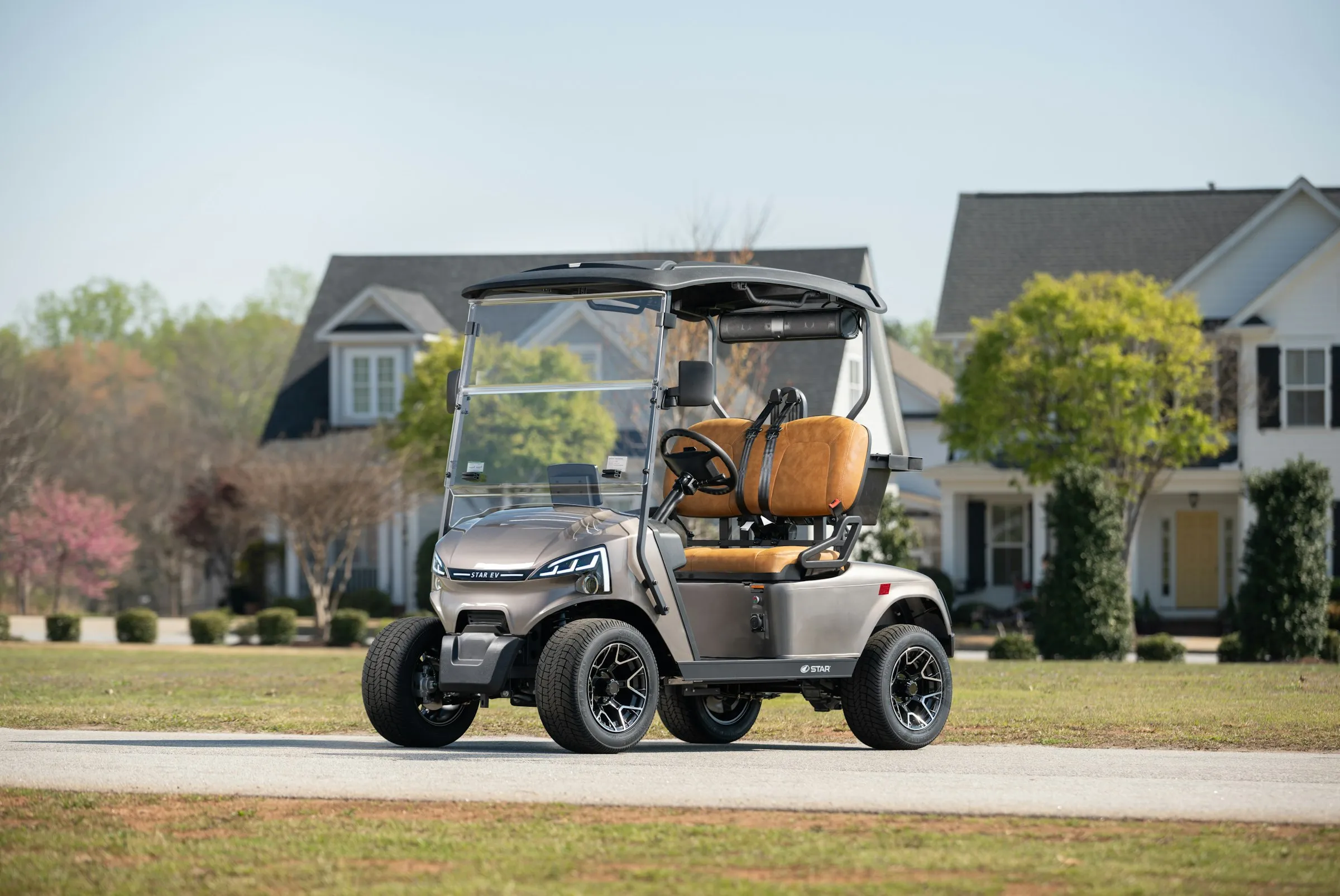
How much is a golf cart? New, used and lithium prices in 2026
A used fleet cart runs about $3,000 to $5,500, a refurbished one about $5,500 to $9,000, and a new two-passenger cart about $8,500 to $13,000 depending on gas, lead-acid or lithium. Lifted four-seaters and street-legal LSVs are about $14,000 to $25,000. Budget roughly $400 to $900 a year to own one.
Owner guideUpdated Nov 5, 2026

How old do you have to be to drive a golf cart?
On your own property, any age the owner is comfortable with; no law reaches the back yard. On public roads where carts are allowed, most ordinances require a valid driver's license, which means 16 in most of the country, and a few golf communities set 14 or 15 with a permit or a supervising adult. An LSV is a motor vehicle and always needs a licensed driver.
Owner guideUpdated Nov 5, 2026

Used golf cart checklist: what to inspect and what to pay
Bring a multimeter and check five things: the serial plate for year and voltage, the battery date codes and the rested pack voltage, that the matching charger comes with it, frame rust at the battery tray and rear spring hangers, and that a title or a bill of sale with the serial number is in hand. A sound 8 to 12 year old fleet cart is about $3,000 to $5,500; the same cart with a fresh battery set is about $1,000 to $1,500 more.
Owner guideUpdated Nov 5, 2026
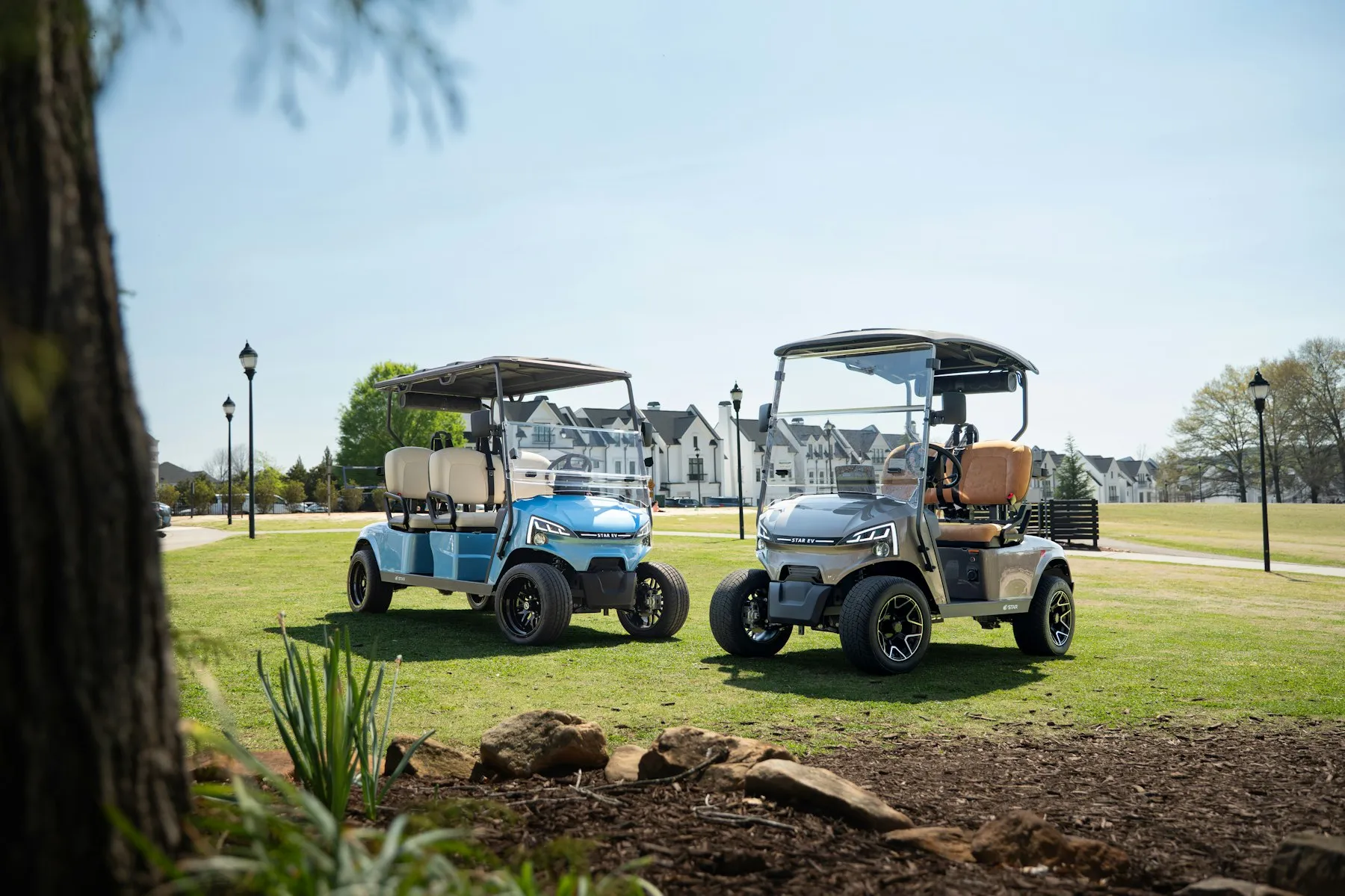
Can you drive a golf cart on the road? Where, when and with what
Only where a city, county or community ordinance allows it. Most golf cart ordinances limit carts to streets posted at 25 mph or less (some go to 30 or 35), to daylight unless the cart has headlights, taillights and turn signals, and to marked crossings of bigger roads. A cart built and registered as an LSV can generally use any road posted 35 mph or less. No ordinance puts a golf cart on a highway.
Owner guideUpdated Nov 5, 2026

Do you need a license to drive a golf cart?
On private property, no; the owner sets the rules. On public roads, most local ordinances that allow golf carts require a valid driver's license, and a low-speed vehicle (LSV) is titled, registered and insured like a car, so a license is required everywhere. Check your city or county ordinance before the first public street, because a town with no ordinance has not allowed carts at all.
Owner guideUpdated Nov 5, 2026
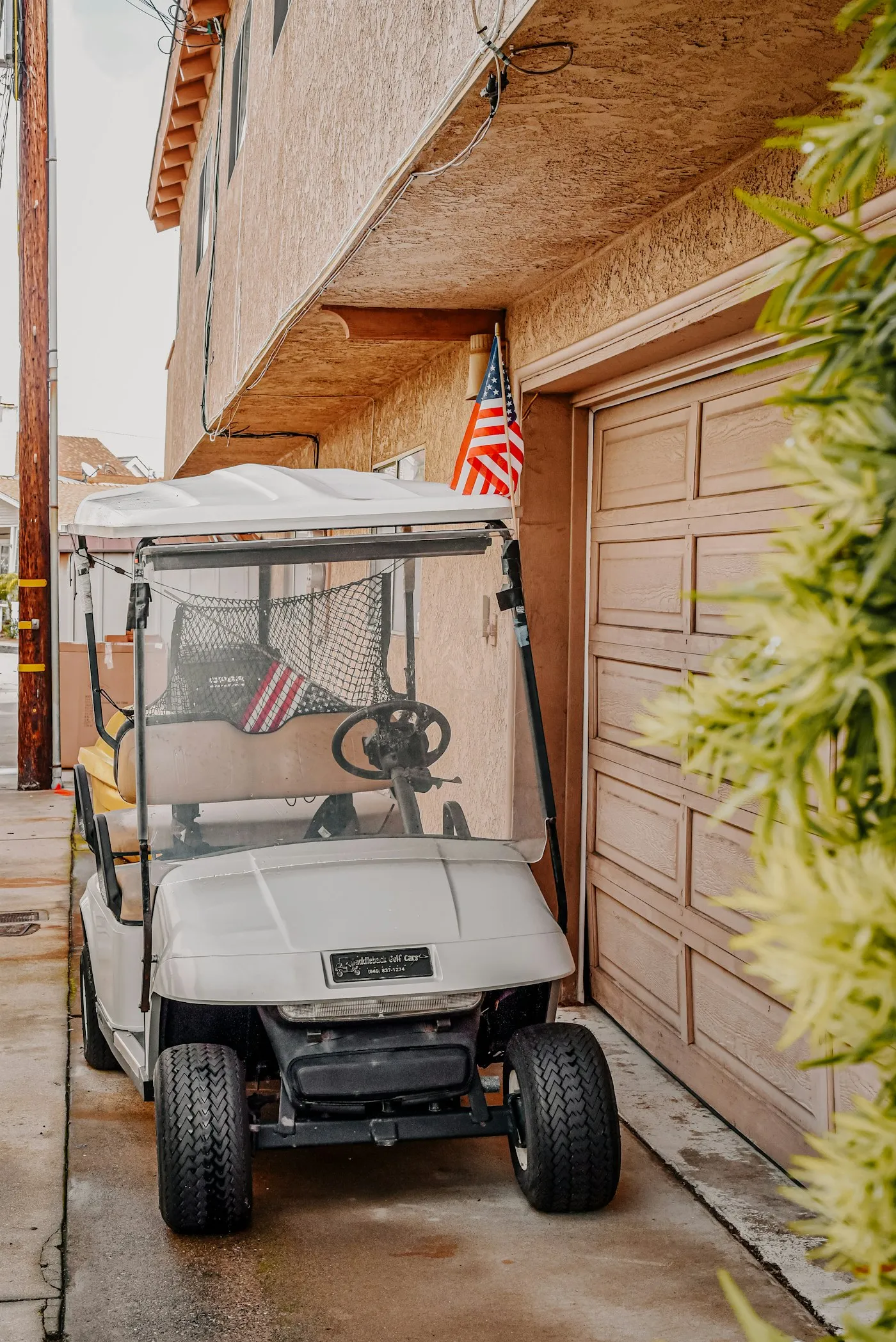
Golf cart dimensions: how wide, long and tall a cart really is
A standard two-passenger golf cart is about 47 to 48 inches wide, 92 to 96 inches long and 68 to 72 inches tall at the roof. A four-passenger cart with a rear seat is about 108 to 130 inches long (9 to 11 feet). A 4 to 6 inch lift with 22 inch tires adds about 7 to 10 inches of height, to around 76 to 82 inches. All of that fits through a standard 7 ft tall, 8 ft wide garage door with room to spare on width.
Owner guideUpdated Nov 5, 2026
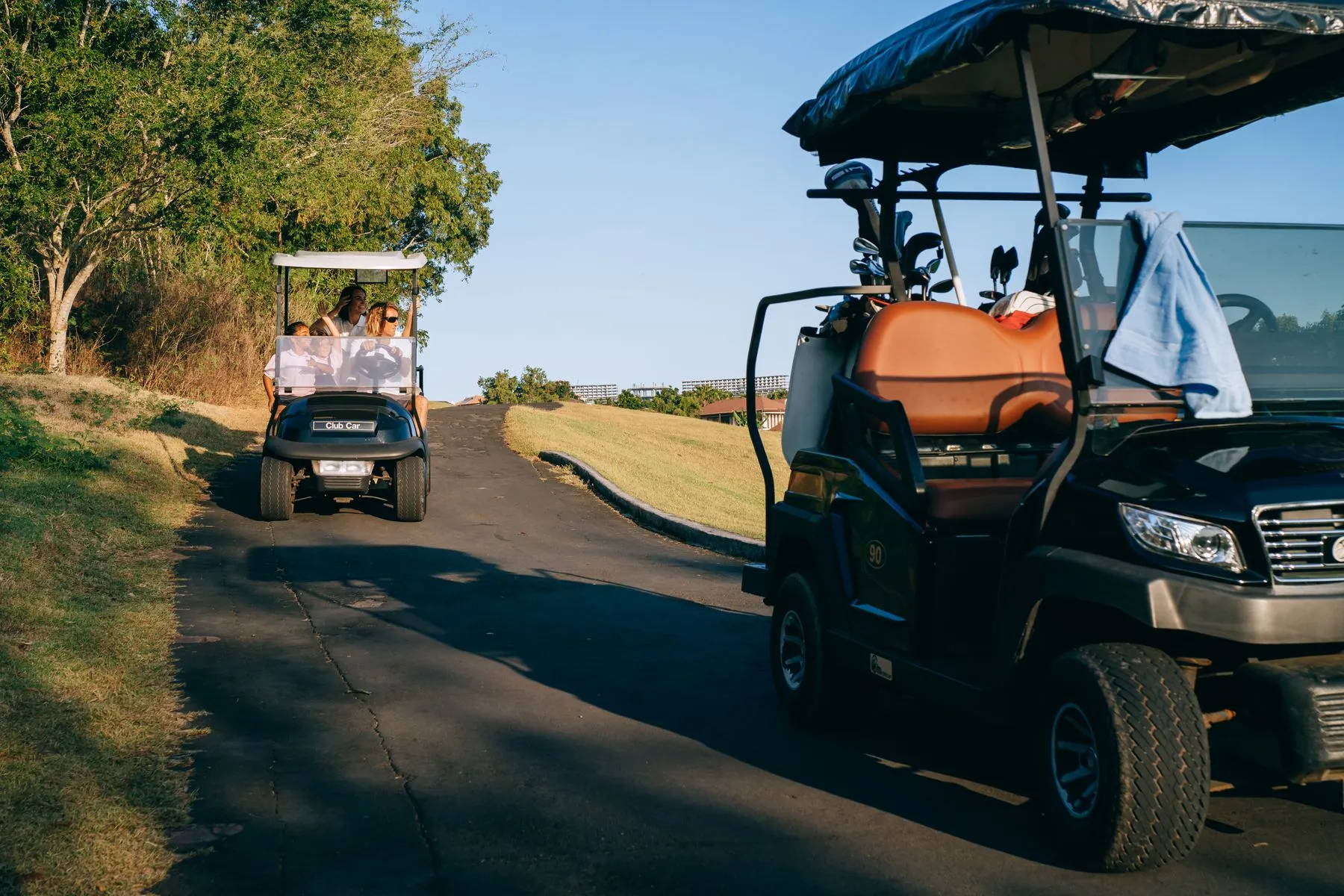
How much does a golf cart weigh? Curb weights by type
A standard two-passenger electric cart weighs about 900 to 1,100 lb with lead-acid batteries and about 600 to 750 lb with lithium. A gas two-seater is about 600 to 800 lb. Four-passenger and lifted carts run about 1,100 to 1,500 lb and six-passenger carts about 1,400 to 1,800 lb. The lead-acid battery set alone is 350 to 400 lb; a lithium pack is 80 to 120 lb.
Owner guideUpdated Nov 5, 2026
Other categories



Get the fitment guide for your cart
One page with your cart's voltage, tire sizes, lift-kit family and the parts that fit it. We send it once, then a short note when a price or a part changes.
No spam, and we never sell your address. One-click unsubscribe.