Lead-acid or lithium: what it really costs over ten years
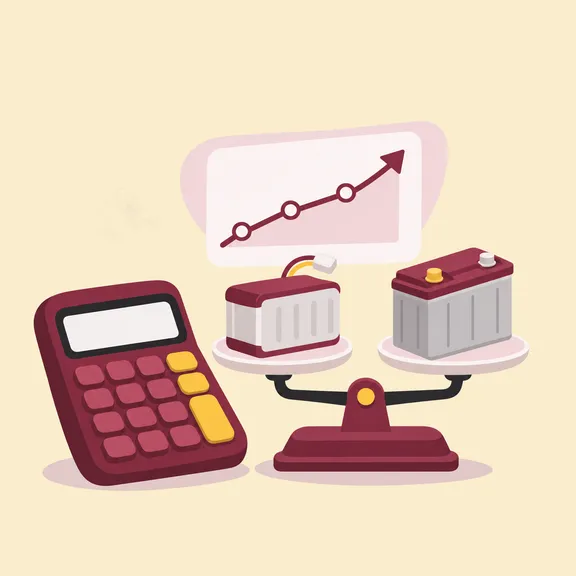
A lithium pack costs more on the day you buy it and less by the time the second lead-acid set would have gone in. This calculator does the arithmetic with your numbers, not ours.
Free, no sign-up Results update as you type
The answer with your numbers
The line-by-line
| Over ten years | Lead-acid | Lithium |
|---|---|---|
| Sets or packs bought | ||
| Battery spend | ||
| Charger and electricity | ||
| Ten-year total | ||
| Cost per mile | ||
| Usable energy per charge | ||
| Range per charge, about | ||
| Weight in the cart |
What this does not count
Watering, terminal cleaning and the Saturday you spend doing it. A lead-acid set that dies early because it sat flat over winter. The resale bump a lithium cart gets. The cable and tray work a conversion sometimes needs on older carts. All of those lean the same way, so treat the table as the conservative case for lithium rather than the generous one.
Where the defaults come from
A 48V flooded set is usually six 8V batteries at around 170Ah on the 20-hour rate, about 63 lb each. A 48V 105Ah LiFePO4 pack is the common replacement size and weighs roughly a quarter of that. Lives are what owners report when the set is charged after every use and watered; abuse shortens lead-acid far faster than lithium. Prices are our estimates as of the date in the footer; put yours in.
Ready to pick a pack? Start with the lithium guide or, if you are staying with flooded, the 8-volt sets.
Get the fitment guide for your cart
One page with your cart's voltage, tire sizes, lift-kit family and the parts that fit it. We send it once, then a short note when a price or a part changes.
No spam, and we never sell your address. One-click unsubscribe.