Best golf cart chargers by plug: Club Car, EZGO, Yamaha and lithium
A charger has to match three things: the voltage of the pack, the chemistry of the pack, and the plug on the side of the cart. Get one wrong and it either will not connect, will not finish, or will slowly cook a set of batteries. These are the chargers worth buying, sorted by the plug they fit.
We pick from published specs, maker instructions and what owners report. We may earn a commission from links on this page; it never changes what we recommend. How we choose
Key takeaways
- For one charger that fits any cart and any battery type, buy the Lester Summit II with your plug.
- To replace a dead charger, buy by the receptacle: PowerWise D for 36V EZGOs, round three-pin for Club Cars.
- A charger must match pack voltage, chemistry and plug; a lead-acid charger will not fill a lithium pack.
- An EZGO RXV will not drive while the charger is plugged in; if it stays dead after, check the charge port.
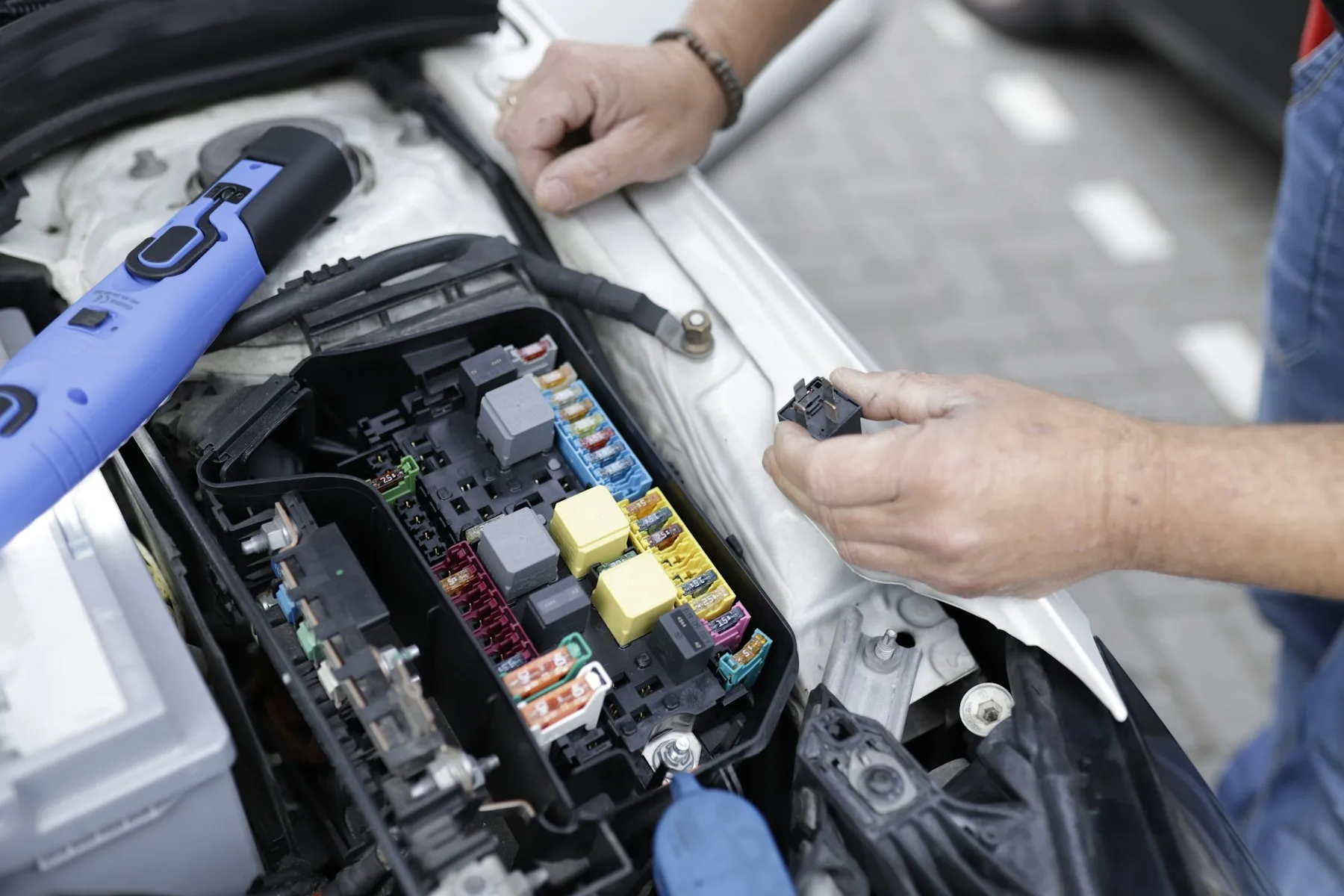
Our picks at a glance
Prices are estimates as of Oct 17, 2026
- 1Best overall, any cartLester Summit Series II 1050WAny 36V or 48V cart; order with the Club Car 3-pin, EZGO PowerWise D, EZGO 3-pin, Yamaha or SB50 connectorabout$450–$650
- 2Best for lithium or mixed garagesNOCO Genius GX4820 and GX3626Any 48V cart (GX4820) or 36V cart (GX3626); buy the NOCO plug adapter for your cartabout$450–$650
- 3For 36V EZGO cartsEZGO PowerWise 36V charger, D-plugEZGO Marathon 1994 and later, Medalist, and TXT through 2009, all 36Vabout$230–$450
- 4For Club Car 48V carts48V Club Car round 3-pin replacement chargerClub Car DS 1995 and later, Precedent, Onward and Tempoabout$200–$350
- 5For EZGO TXT48 and RXV48V EZGO 3-pin replacement charger (Delta-Q style)EZGO TXT48 2010 and later, EZGO RXVabout$220–$400
- 6Best value 48V with a choice of plugSchauer 48V 15A golf cart chargerAny 48V cart; choose the plug when orderingabout$300–$420
- 7For lithium conversions48V or 36V lithium charger with SB50 connectorAny lithium conversion that fitted an SB50 receptacle; Eco Battery, RoyPow, Epoch and Dakota all sell oneabout$250–$450
The picks in detail
1.Lester Summit Series II 1050W
36V or 48V selectable, about 17A at 48V, lead-acid and lithium profiles, your choice of plug at order
Fits: Any 36V or 48V cart; order with the Club Car 3-pin, EZGO PowerWise D, EZGO 3-pin, Yamaha or SB50 connector
At Amazon. We may earn a commission.
Pros
- Switches between 36V and 48V
- Flooded, AGM and lithium profiles
- Your choice of plug at order
Cons
- Costs more than a single-plug replacement
Why we picked it
Lester built the original factory chargers for Club Car and EZGO, and the Summit II is the one charger that handles any cart in the neighborhood. It runs at 36V or 48V, carries profiles for flooded, AGM and lithium packs, and comes with whichever plug you order. If you own two carts, or you are planning a lithium conversion and want a charger that will follow you, this is the buy. The Pro version adds a phone app.
Before you buy: Select the right profile when you set it up. The flooded profile on a lithium pack will undercharge it; the lithium profile on a flooded set will overcharge.
2.NOCO Genius GX4820 and GX3626
GX4820: 48V 20A. GX3626: 36V 26A. Lead-acid, AGM and lithium modes, ships with ring terminals
Fits: Any 48V cart (GX4820) or 36V cart (GX3626); buy the NOCO plug adapter for your cart
At Amazon. We may earn a commission.
Pros
- 20A at 48V cuts charge time
- A proper lithium mode with the right cutoff
Cons
- Plug adapter costs extra, about 30 to 50 dollars
- Each model is one voltage only
Why we picked it
NOCO's industrial-line chargers put out more current than most stock units, 20A at 48V, which cuts a flooded set's charge time by a few hours and suits lithium packs that accept it. The lithium mode is a proper one, with the right cutoff voltage. The unit ships with bare ring terminals, so you buy the adapter cable for your receptacle separately, about 30 to 50 dollars.
Before you buy: Pick the voltage at purchase; the GX4820 is 48V only and the GX3626 is 36V only. Check your pack maker's maximum charge current before running 20A into a small lithium pack.
3.EZGO PowerWise 36V charger, D-plug
36V, 15 to 21A depending on version, PowerWise D-shaped plug, flooded profile
Fits: EZGO Marathon 1994 and later, Medalist, and TXT through 2009, all 36V
At Amazon. We may earn a commission.
Pros
- Plugs straight into 36V EZGOs
- No adapter and no rewiring
Cons
- Charges lead-acid packs only
- Genuine EZGO units cost more
Why we picked it
The PowerWise D-plug has been on 36V EZGOs since 1994 and this is the charger it was built for. Genuine EZGO units cost more; Lester and other aftermarket versions with the same plug do the same job for less. Either one is a plug-in replacement for the charger that quit, with no adapter and no rewiring.
Before you buy: Lead-acid only. If you are going lithium on a 36V TXT, buy a lithium charger with a D-plug or fit a new receptacle instead.
4.48V Club Car round 3-pin replacement charger
48V, 15 to 17A, Club Car round 3-pin plug, flooded profile; some units add AGM and lithium
Fits: Club Car DS 1995 and later, Precedent, Onward and Tempo
At Buggies Unlimited. We may earn a commission.
Pros
- Fits a DS, Precedent and Onward alike
- About a third of a genuine unit's price
Cons
- OBC carts may need a bypass
- Flooded profile only on many units
Why we picked it
Club Car has used the same round three-pin receptacle since 1995, so a replacement charger with that plug fits a DS, a Precedent and an Onward alike. A genuine PowerDrive unit runs 500 to 800 dollars; the aftermarket units from Lester, Form and others do the same 15 to 17 amps for a third of it. If the cart has the OBC (onboard computer) and you have removed it, make sure the charger does not need the OBC signal to start.
Before you buy: Older Club Cars with the onboard computer need a charger that talks to it or an OBC bypass. Ask before you buy.
5.48V EZGO 3-pin replacement charger (Delta-Q style)
48V, 15 to 18A, EZGO notched 3-pin plug, flooded and AGM profiles; some add lithium
Fits: EZGO TXT48 2010 and later, EZGO RXV
At Buggies Unlimited. We may earn a commission.
Pros
- About half the price of a new Delta-Q
- Same plug as the factory charger
Cons
- RXV owners need an RXV-listed unit
Why we picked it
EZGO's 48V carts use a notched three-pin receptacle designed for the Delta-Q QuiQ charger, which is a good unit at 500 to 700 dollars new. The aftermarket replacements with the same plug run 15 to 18 amps for half the price. The RXV receptacle also carries a charger interlock wire that shuts the controller off while the charger is connected, so buy a charger listed for the RXV specifically if that is what you have.
Before you buy: The TXT48 and RXV share a plug but not always the same charger logic. Match the listing to your model.
6.Schauer 48V 15A golf cart charger
48V, 15A, flooded and AGM profiles, Club Car 3-pin, EZGO 3-pin or Yamaha plug at order
Fits: Any 48V cart; choose the plug when ordering
At Amazon. We may earn a commission.
Pros
- Long record as a US-built charger
- Your choice of plug at order
Cons
- Lead-acid only, no lithium profile
- No phone app like the Lester Pro
Why we picked it
Schauer has built chargers in the US for decades and its 48V golf cart unit is a plain, reliable lead-acid charger with your plug on the end. It does not have an app or a lithium profile. What it has is a long record and a price between the aftermarket no-names and the Lester. The 15 amps charges a flooded set from half in about eight hours.
Before you buy: Lead-acid only. Not the one to buy if lithium is in your plans.
7.48V or 36V lithium charger with SB50 connector
15 to 20A, lithium profile at your voltage, SB50 Anderson plug, often sold by the pack maker
Fits: Any lithium conversion that fitted an SB50 receptacle; Eco Battery, RoyPow, Epoch and Dakota all sell one
At Buggies Unlimited. We may earn a commission.
Pros
- Cutoff voltage set for the pack
- Easy second charger for a lake house
Cons
- Only fits carts with an SB50 receptacle
Why we picked it
Most lithium kits ship a charger with an SB50 Anderson connector and a receptacle to match. When you want a second charger for the lake house, or the kit charger fails, the simplest replacement is the pack maker's own unit, because its cutoff voltage is set for that pack. Any 48V lithium charger with a 58.4V cutoff and an SB50 will also work; check the pack's maximum charge current first.
Before you buy: A lithium charger has no float stage. It stops when full. That is correct, not a fault.
If you want one golf cart charger that fits any cart you will own and any battery you will put in it, buy the Lester Summit Series II with the plug for your current cart. If you want to replace the charger that died with one that plugs straight in, buy by the receptacle on the side of your cart: a PowerWise D-plug unit for a 36V EZGO, a round three-pin unit for a Club Car, a notched three-pin for a TXT48 or RXV. If you have gone lithium, buy a charger with a lithium profile, which rules out most of the cheap replacements.
Chargers are the part of a golf cart battery setup people replace in a hurry, so this page is organized the way you shop in a hurry: by plug, then by battery type. The battery calculator will tell you how many hours your set needs at a given charger output if you want to compare amps.
Voltage, chemistry, plug
A charger has to match the pack voltage: 36V for six 6V batteries, 48V for six 8V, four 12V, eight 6V or a 48V lithium pack. A 36V charger on a 48V pack never finishes; a 48V charger on a 36V pack boils it. Only the Lester Summit II switches between them; everything else on this list is one voltage.
It has to match the chemistry. Flooded lead-acid wants a charger that finishes with a long float and an occasional equalize. AGM wants a lower finishing voltage and no equalize. Lithium wants a fixed cutoff, 58.4V for a 48V pack and 43.8V for a 36V pack, and then nothing; no float, no trickle. A charger with the wrong profile does not fail loudly. It shortens the pack’s life quietly over a year.
And it has to match the plug. The receptacle on the cart is the part that varies most by make and year, and it is the first thing to identify.
Plug types by cart
Club Car round three-pin: every Club Car from 1995 on, DS, Precedent, Onward and Tempo. Club Car DS before 1995, 36V, used a crowfoot plug.
EZGO PowerWise D-plug: 36V EZGOs from 1994, which is the Marathon’s last year, the Medalist and the TXT through 2009. The D shape keys the plug so it only goes in one way. EZGO Marathons before 1994 used a crowfoot.
EZGO notched three-pin: the 48V EZGOs, TXT48 from 2010 and the RXV. It is the connector Delta-Q uses on its QuiQ chargers, so you will see it called a Delta-Q plug. The RXV receptacle adds a charger interlock wire that disables the controller while the charger is connected, so an RXV wants a charger listed for the RXV.
Yamaha: G19 and G22 use a round two-pin. Drive and Drive2 use a three-pin that is not interchangeable with Club Car’s or EZGO’s. G14 and G16, the 36V Yamahas, use the two-pin as well.
SB50 Anderson: the grey rectangular connector most lithium kits ship with, along with a receptacle to replace the stock port. If a previous owner converted the cart, this is probably what you have.
If the cart’s year is in doubt, the fitment pages for Club Car, EZGO and Yamaha show where the serial plate is. Adapter cables between most plug types exist for $30 to $60, which is how the NOCO and other bare-terminal chargers connect.
How many amps
Stock chargers run 15 to 21 amps, and that is the right range. A 48V 15A charger refills a flooded set from half in about eight hours, which is overnight. Twenty amps saves two hours. Past about 25 amps you are heating flooded batteries more than charging them, and most lithium packs cap their charge current at 20 to 50 amps in the BMS anyway, so a bigger charger buys nothing.
What matters more than amps is that the charger finishes correctly. A flooded set that never reaches full sulfates; the charging guide explains how to tell whether yours is finishing and how often to equalize.
Onboard computers and charger interlocks
Two carts complicate a charger swap. Club Car DS and Precedent models with the onboard computer (OBC) use it to control charging; a replacement charger either has to work with the OBC or the OBC has to be bypassed, which some owners do when the OBC fails. Ask the seller which the charger expects. Precedents from about 2014, and the Onward and Tempo, dropped the OBC for the ERIC charging system, which adds an interlock wire at the receptacle; buy a charger listed as ERIC-compatible for those.
The EZGO RXV has a charger interlock: EZGO’s manual says the controller is disabled, so the cart cannot be driven or towed, while the charger is connected. The interlock runs through its own wire at the charge port, and when an older port fails it can tell the controller a charger is still connected, which leaves the cart dead after you unplug. That is a receptacle fault, not the park brake, which is the separate automatic motor brake released with the Tow switch. Buy a charger that lists the RXV so the plug and interlock pins match. The RXV upgrades page has more on that system.
Which charger for your cart
| Cart | Voltage | Plug | Flooded or AGM | Lithium |
|---|---|---|---|---|
| Club Car DS to 1994 | 36V | Crowfoot | Lester Summit II with crowfoot | Lester Summit II or pack maker’s with SB50 |
| Club Car DS 1995 and later, Precedent, Onward, Tempo | 48V | Round 3-pin | Club Car 3-pin replacement, Schauer or Lester | Lester Summit II or NOCO GX4820 with adapter |
| EZGO Marathon 1994, Medalist, TXT to 2009 | 36V | PowerWise D | PowerWise or Lester with D-plug | Lester Summit II or NOCO GX3626 with adapter |
| EZGO TXT48, RXV | 48V | Notched 3-pin | EZGO 3-pin replacement or Delta-Q | Lester Summit II (RXV-listed) |
| Yamaha G14, G16 | 36V | 2-pin round | Lester Summit II with Yamaha plug | Lester Summit II |
| Yamaha G19, G22 | 48V | 2-pin round | Schauer or Lester with Yamaha plug | Lester or NOCO with adapter |
| Yamaha Drive, Drive2 | 48V | 3-pin | Schauer or Lester with Drive plug | Lester or pack maker’s with SB50 |
Where to keep it and how to use it
Mount the charger on the garage wall near the outlet with air around it, not on the cart floor where it collects dirt and gets kicked. Plug the cart in every time it comes home, even after a short run; flooded batteries live longest when they are never left half charged, and lithium does not mind. Let the charger finish on its own. Pulling the plug when the fan slows down is how a flooded set ends up chronically short.
If a flooded set is more than four years old and the charger has started running longer than it used to, the batteries are the likely problem, not the charger; the test guide will tell you in an hour. And if the charger is dying at the same time as the pack, the lithium overview is worth a read before you buy either, because every kit there includes the charger.
Questions owners ask
Which plug does my cart have?
Club Car 1995 and later has a round three-pin. EZGO 36V carts from 1994 have the D-shaped PowerWise plug; EZGO TXT48 and RXV have a notched three-pin. Yamaha G19 and G22 use a two-pin round plug; Drive and Drive2 use a three-pin. Club Car DS before 1995 and EZGO Marathons before 1994 use a crowfoot plug. Lithium kits usually fit an SB50 Anderson.
Can I use a 36V charger on a 48V cart?
No. A 36V charger will never bring a 48V pack to full and most will not start at all. A 48V charger on a 36V pack will overcharge it and boil the water out. The Lester Summit II switches between the two; everything else is one voltage.
Can I charge lithium with my old charger?
No. A lead-acid charger stops at the wrong voltage and may trip the BMS or leave the pack short. You need a charger with a lithium profile at your voltage: the Lester Summit II, the NOCO GX, or the pack maker's own unit.
How many amps do I need?
Stock chargers are 15 to 21 amps and that is plenty. A 48V 15A charger refills a flooded set from half in about eight hours, overnight. Twenty amps saves a couple of hours. More than about 25 amps is hard on flooded batteries and most lithium packs cap charge current anyway.
My charger clicks and does nothing. Is it dead?
Often not. Most golf cart chargers will not start if the pack voltage is too low to recognize, under about 30V on a 36V pack or 40V on a 48V pack. Charge each battery individually with a 6V, 8V or 12V automotive charger until the pack comes up, then try again. If the pack reads fine and the charger still will not start, the charger is the problem.
Not sure it fits your cart?
Pick your make, model and year. We'll tell you the voltage and which parts fit.
Keep reading
All batteries guidesHow long does it take to charge a golf cart? Times by pack
A 48V flooded set run down to about half takes 6 to 8 hours on a standard 13-amp charger, and 10 to 12 hours from near empty; a 36V set on an 18 to 21-amp charger is similar. A 48V 105Ah lithium pack charges from empty in about 5 to 7 hours on its own 15 to 18-amp charger. Charge after every use, not when the gauge says to.
How-toUpdated Nov 5, 2026
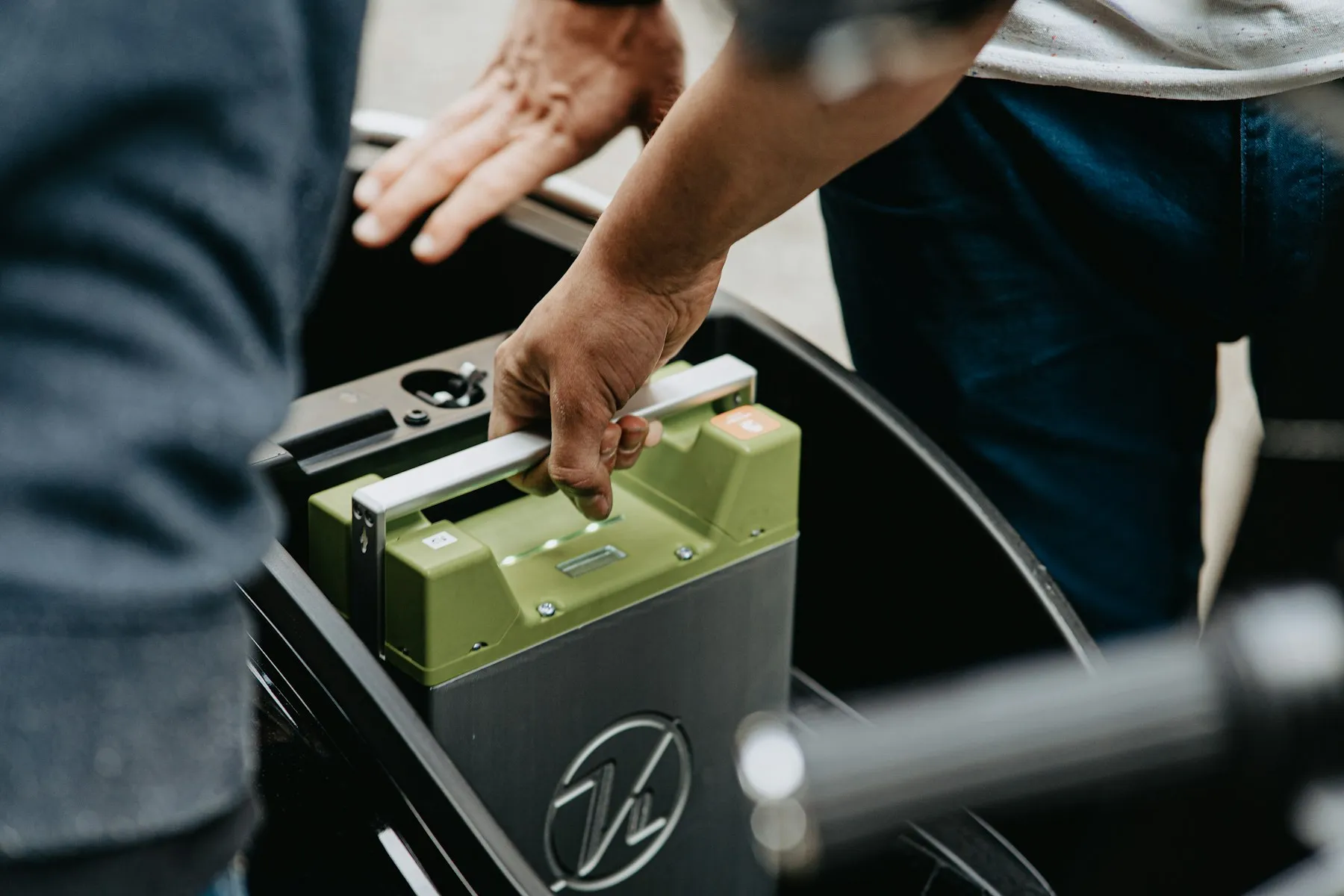
Best lithium golf cart batteries: 48V and 36V packs that fit
A lithium pack costs more than a flooded set on the day you buy it and less by the time the second flooded set would have gone in. These are the packs that fit a standard cart, from the ones we would buy for a daily driver to the ones that make sense for a 36V cart you are keeping original.
Best picks · 6 picksUpdated Nov 5, 2026
Best 8 volt golf cart batteries for 48V carts: T-875, GC8 and rivals
Six 8V batteries is the standard 48V set in a Club Car DS or Precedent, a TXT48 or a Yamaha Drive. They share a case with the 6V batteries but carry four cells instead of three, so the plates are thinner and the set lives a year or so less. Here is how to buy a set that gets to year five.
Best picks · 5 picksUpdated Nov 5, 2026