Best golf cart seat belts: retractable, lap and rear-seat kits
Seat belts are on nearly every street-legal list and on the federal LSV rule, and they are the one item that has to bolt to steel, not fiberglass. These are the kits that do it properly, by seat and by make.
We pick from published specs, maker instructions and what owners report. We may earn a commission from links on this page; it never changes what we recommend. How we choose
Key takeaways
- Buy retractable lap belts on a bracket bar, one per seat, bolted to steel and never to fiberglass.
- A two-belt front kit is about $35 to $80; a four-seater with rear belts is about $100 to $250.
- A model-specific bracket kit uses factory holes, so the install drops to about an hour.
- Lap belts at every seat meet the LSV rule, but they do not make a cart safe for a car seat.

Our picks at a glance
Prices are estimates as of Oct 17, 2026
- 1Best overallRetractable lap belt kit, 2 belts with universal bracketFront bench of Club Car DS and Precedent, EZGO TXT and RXV, Yamaha Drive and Drive2; bracket bolts to the seat frame or the frame rail behind the seatabout$35–$80
- 2Best valueNon-retractable lap belts, pairAny seat with a steel frame or bracket to bolt to; front or rearabout$20–$45
- 3For rear seatsRear seat belt kit, 2 belts with bracket barRear flip seat kits from Madjax, GTW, RHOX and similar on Club Car, EZGO and Yamaha carts; bolts to the rear seat frameabout$70–$150
- 4Bracket kits by makeSeat belt bracket kit for Club Car, EZGO or YamahaModel-specific for Club Car DS and Precedent, EZGO TXT and RXV, Yamaha Drive and Drive2about$40–$110
- 5Complete kit for a four-seater4-belt retractable seat belt kit with bracketsFour-passenger carts with a front bench and a rear flip or forward-facing seat; brackets are universal and may need shimmingabout$70–$140
The picks in detail
1.Retractable lap belt kit, 2 belts with universal bracket
Two retractable lap belts, 60 to 72 inch webbing, metal latch, a bracket bar with mounting hardware
Fits: Front bench of Club Car DS and Precedent, EZGO TXT and RXV, Yamaha Drive and Drive2; bracket bolts to the seat frame or the frame rail behind the seat
At Amazon. We may earn a commission.
Pros
- Webbing stays out of the battery well
- Bracket bar anchors to steel at both ends
- Retractable belts are the ones that get worn
Cons
- Tall seat cushions need longer webbing
- Sand and salt can jam the retractor
Why we picked it
Retractable belts are the ones that get worn, because the webbing is out of the way when nobody is buckled in and nothing dangles into the battery well. The bracket bar spans the back of the bench so the belts anchor to steel at both ends. Two belts cover the front seat on a two-seater or a four-seater with a rear kit that has its own.
Before you buy: Measure from the frame rail to the seat top before ordering; carts with a tall seat cushion need the longer webbing.
2.Non-retractable lap belts, pair
Two fixed lap belts, adjustable webbing, metal latch, bolt-in ends
Fits: Any seat with a steel frame or bracket to bolt to; front or rear
At Amazon. We may earn a commission.
Pros
- About half the price of retractable belts
- No mechanism for sand to jam
Cons
- Loose belt falls into the battery well
- Cheapest sets use plastic latches that fail
Why we picked it
A plain lap belt does the same job as a retractable one for half the money and has no mechanism to stick with sand in it, which matters on a beach cart. The trade is that the loose belt lies on the seat and falls into the battery well when you flip the cushion up. For a rear seat kit that already has belt tabs, or a budget street-legal conversion, this is the pick.
Before you buy: Buy belts with a metal latch. Plastic latches on the cheapest sets are the part that fails.
3.Rear seat belt kit, 2 belts with bracket bar
Two retractable or fixed lap belts on a bracket bar sized for a rear flip seat frame
Fits: Rear flip seat kits from Madjax, GTW, RHOX and similar on Club Car, EZGO and Yamaha carts; bolts to the rear seat frame
At Buggies Unlimited. We may earn a commission.
Pros
- Bolts to rear seat tabs or crossbar
- Mounting hardware in the box
- A belt at every rear seating position
Cons
- Some budget rear seats have nowhere to bolt
Why we picked it
A rear flip seat is a steel frame with a cushion, and the frame is where the belts belong. Most rear seat kits have belt tabs or a crossbar drilled for them, and this kit bolts to those with the included hardware. It is the right answer for a four-seater that is going street legal, where the rule is a belt at every seating position.
Before you buy: Check that your rear seat frame has tabs or a crossbar. Some budget rear kits have neither, and a belt bolted to the cushion board is not a belt.
4.Seat belt bracket kit for Club Car, EZGO or Yamaha
Steel bracket bar or tabs drilled for your model, with grade 8 hardware; belts sold separately or as a bundle
Fits: Model-specific for Club Car DS and Precedent, EZGO TXT and RXV, Yamaha Drive and Drive2
At Buggies Unlimited. We may earn a commission.
Pros
- Uses factory holes, so no drilling
- Anchors directly to the chassis
- Cuts the install to about an hour
Cons
- Each bracket fits only one model
- Belts may be sold separately
Why we picked it
The hard part of a seat belt install is not the belt, it is finding steel to bolt to under a fiberglass body. A model bracket kit uses the factory seat frame bolts or the frame rail holes, so you drill nothing and the anchor is on the chassis. Buy this with a pair of belts if your cart has no belts now and you want the install to take an hour instead of a Saturday.
Before you buy: A Precedent bracket does not fit a DS and a TXT bracket does not fit an RXV. Match the model, not just the make.
5.4-belt retractable seat belt kit with brackets
Four retractable lap belts, two bracket bars, hardware
Fits: Four-passenger carts with a front bench and a rear flip or forward-facing seat; brackets are universal and may need shimming
At Amazon. We may earn a commission.
Pros
- All four belts in one box
- Costs less than two separate pairs
Cons
- Universal bars may need shimming
- Needs usable bolt holes under both seats
Why we picked it
If the cart is going to an LSV title, the rule is a belt at each seating position, and this gets all four in one box for less than two separate pairs. The brackets are universal bars rather than model-specific, which means a little fitting, but on a four-seater the rear bar usually lands on the rear seat frame without drama.
Before you buy: Universal bars need the right bolt holes to exist. Look under both seats before you order.
Buy retractable lap belts on a bracket bar that bolts to the seat frame or the frame rail, one belt per seat, and spend an extra 40 dollars on the model-specific bracket kit if your cart has nothing to bolt to. A two-belt front kit is about 35 to 80 dollars; a four-seater with rear belts is about 100 to 250 all in. Golf cart seat belts are on nearly every street-legal list, and they are the item most often installed badly.
Belts sit alongside lights and mirrors in the lights and street-legal section. The street-legal guide has the full checklist, and the LSV explainer covers the federal rule that puts belts at every seat.
Why belts come up
A factory golf cart has no belts, because on a course at 12 miles an hour nobody asked for them. Three things change that. A town that allows carts on its streets usually lists belts in the ordinance. The federal LSV standard requires a belt at every seating position on a vehicle built or converted to 20 to 25 mph. And a grandparent with a four-year-old on the back seat wants one regardless.
The rules generally ask for a lap belt per seat. Shoulder belts are not required on an LSV by the federal rule, and on a converted cart there is no engineered anchor for one anyway.
Mount to the frame, not the body
This is the whole job. A golf cart body is fiberglass or plastic over a steel or aluminum chassis. A belt bolted through the body pulls through the first time anyone leans on it hard, and a belt that pulls through is worse than none because somebody trusted it.
Belt anchors go on steel: the seat frame itself, the frame rail that runs behind the front bench, or a bracket bar that bolts to either. Use the hardware in the kit or grade 8 bolts with a flat washer and a lock nut, and put a large backing washer on the far side of any thin steel. If the only metal you can find is a thin stamped seat pan, you need the bracket kit.
Rear flip seats are easier than they look. The seat kit is a welded steel frame, and most of them have belt tabs or a drilled crossbar for exactly this. Bolt the belts to those. If your rear kit has neither, a bracket bar across the frame gives you a place.
Retractable or fixed
Retractable belts pull back into a housing when unbuckled. The webbing stays off the seat, out of the battery well when you flip the cushion, and out of the way of a passenger sliding in. They cost 15 to 20 dollars more per pair and the retractor is a mechanism that sand and salt can jam.
Fixed lap belts are a strap, a latch and two bolt ends. Nothing to fail, half the price, and they flop around. On a beach cart or a work cart, fixed is fine. On a family cart that guests ride, retractable is what gets buckled.
Either way, insist on a metal latch. The lightest belt sets use a plastic buckle that cracks in the sun.
Brackets by make
Where the frame holes are differs by model, which is why the bracket kits are model-specific. A Precedent bracket uses the seat frame bolts on a Precedent and nothing else. The table is the short version; the fitment pages for Club Car, EZGO and Yamaha explain how to confirm the model from the serial plate.
| Cart | Front belt anchor | Note |
|---|---|---|
| Club Car DS | Frame rail behind bench, or DS bracket kit | Flat steel rail; universal bars usually land |
| Club Car Precedent, Onward, Tempo | Seat frame bolts with Precedent bracket | Seat hinge area is the anchor |
| EZGO TXT | Frame rail or TXT bracket kit | Rail is accessible with the seat up |
| EZGO RXV | RXV bracket kit | Different frame from TXT; TXT brackets do not fit |
| Yamaha Drive, Drive2 | Drive bracket kit | Frame rail is narrow; measure before a universal bar |
Rear seats are the same across makes once the seat kit is on: the belts go to the seat kit frame, not the cart.
The child seat question
Belts alone do not make a cart a safe place for a car seat. A car seat is tested in a vehicle with a crash-rated seat, a belt path proven with that seat, a roof and doors. A golf cart has an open side, a bench cushion on a plywood or plastic board, and no crash structure. Car seat manufacturers specify their seats for passenger vehicles, and a cart is not one.
A lap belt threaded through a car seat’s belt path will hold it on the bench at cart speeds, and some owners do exactly that for a slow ride to the pool. That is a judgment call about a slow ride, not a safe car seat installation, and nobody selling belts should tell you otherwise. If children ride in the cart regularly, a lap belt sized for the child, a rear-facing seat with a grab bar, and a slow pace are the real tools.
Install: about an hour with a bracket kit
Flip the seat up and look for steel. On most carts the frame rail behind the bench has holes already. Bolt the bracket bar to the rail or the seat frame with the kit hardware and a backing washer on the far side. Bolt each belt end to the bar, buckle facing the center of the seat. Pull hard on each belt before you call it done; if anything flexes, you have found plastic.
For a rear flip seat, bolt the belts to the seat frame tabs with the seat in the forward-facing position and check that the belts still reach with the seat flipped to the cargo position, or route them so they clear. Plan on an hour per seat the first time, less with a model bracket kit.
What goes with belts
Belts are usually the last item on the street-legal list after lights and mirrors. The mirror guide covers the strut clamps, the street-legal kits page compares the complete packages, and if a rear seat is part of the plan, the rear seat kit guide covers which ones have belt tabs.
Questions owners ask
Do golf carts need seat belts?
On the course, no, and factory carts do not come with them. On a public street it depends on where you live, but most local golf cart ordinances include belts and the federal LSV rule requires a belt at every seating position. Plenty of owners add them for a grandchild regardless of the rule.
Where do seat belts mount on a golf cart?
To steel. The seat frame, the frame rail behind the bench, or a bracket bar bolted to either. Never to the fiberglass or plastic body, the seat cushion board or the rear body panel; a bolt through fiberglass pulls through under load.
Can I put a child car seat in a golf cart?
Seat belts alone do not make a cart a safe place for a car seat. A car seat is designed to be anchored in a vehicle with a crash-tested seat, a belt path tested with that seat and doors around it, and a golf cart has none of those. Car seat makers specify their seats for passenger vehicles. A lap belt on a cart will hold a child seat in place at cart speeds, and some owners do it, but it is not the same thing as a properly installed car seat and you should not treat it as one.
Retractable or non-retractable?
Retractable belts are tidier and stay out of the battery well; fixed belts are cheaper and have no mechanism to jam. On a beach cart, sand gets into retractors. On a cart that gets ridden by kids and guests, retractable belts are the ones that end up buckled.
Are three-point shoulder belts available for golf carts?
Some kits mount a shoulder belt to the roof strut. The strut is not built as a belt anchor on a stock cart, and we would not count on it. Factory-built LSVs that have shoulder belts anchor them to a reinforced frame. On a converted cart, lap belts anchored to the frame are the honest option.
Not sure it fits your cart?
Pick your make, model and year. We'll tell you the voltage and which parts fit.
Keep reading
All lights & street-legal guides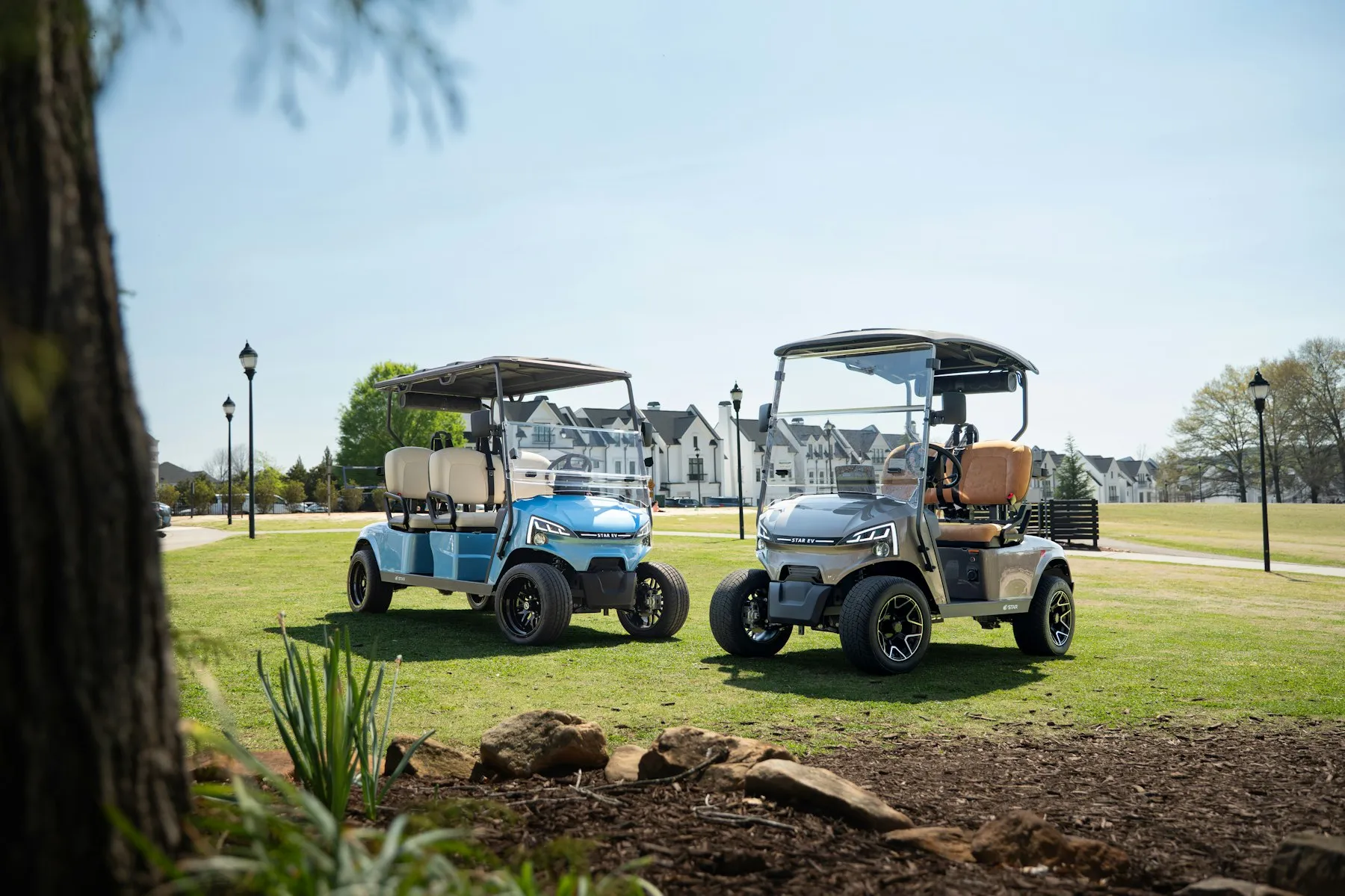
How to make a golf cart street legal: the equipment list and costs
In most of the US a golf cart becomes street legal one of two ways: your city or county passes an ordinance allowing carts on certain local roads with a short equipment list (usually lights, mirrors, a horn and reflectors), or the cart is built or converted to the federal low-speed vehicle standard (20 to 25 mph, 17-digit VIN, lights, signals, mirrors, seat belts, windshield, parking brake, reflectors) and titled and registered through the state. Check your local ordinance and state DMV before buying parts, because the list and the process are set there.
GuideUpdated Nov 5, 2026
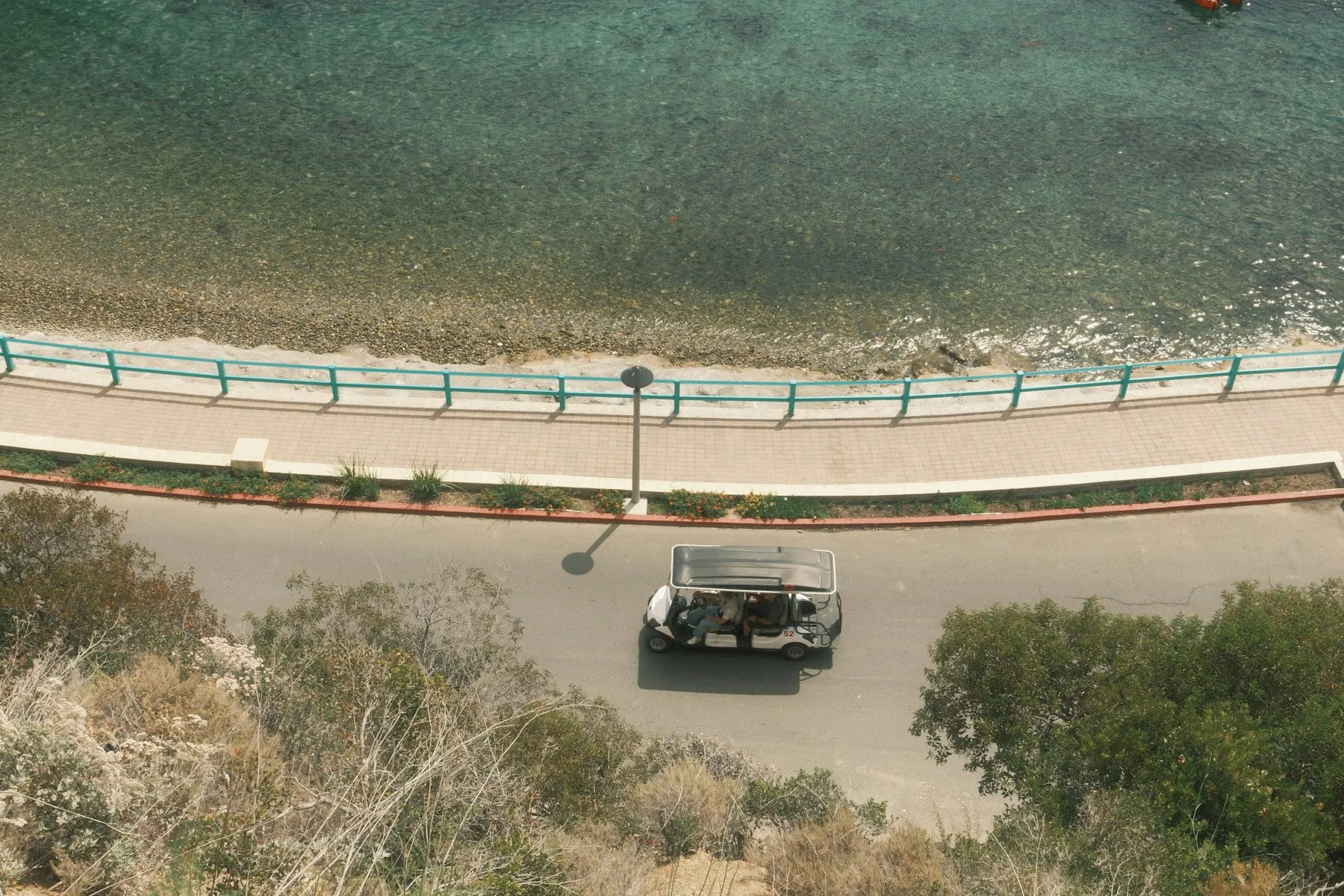
What is an LSV? Low speed vehicles vs golf carts, explained
An LSV, or low speed vehicle, is a federal vehicle class: four wheels, a top speed between 20 and 25 mph, a gross weight under 3,000 pounds, and a fixed list of equipment including headlamps, stop lamps, turn signals, taillamps, reflectors, mirrors, a parking brake, a windshield, seat belts and a VIN. A golf cart with all of that, built or converted to that speed and titled, is an LSV; a cart with lights but no title, or a top speed under 20 mph, is still a golf cart.
GuideUpdated Nov 5, 2026
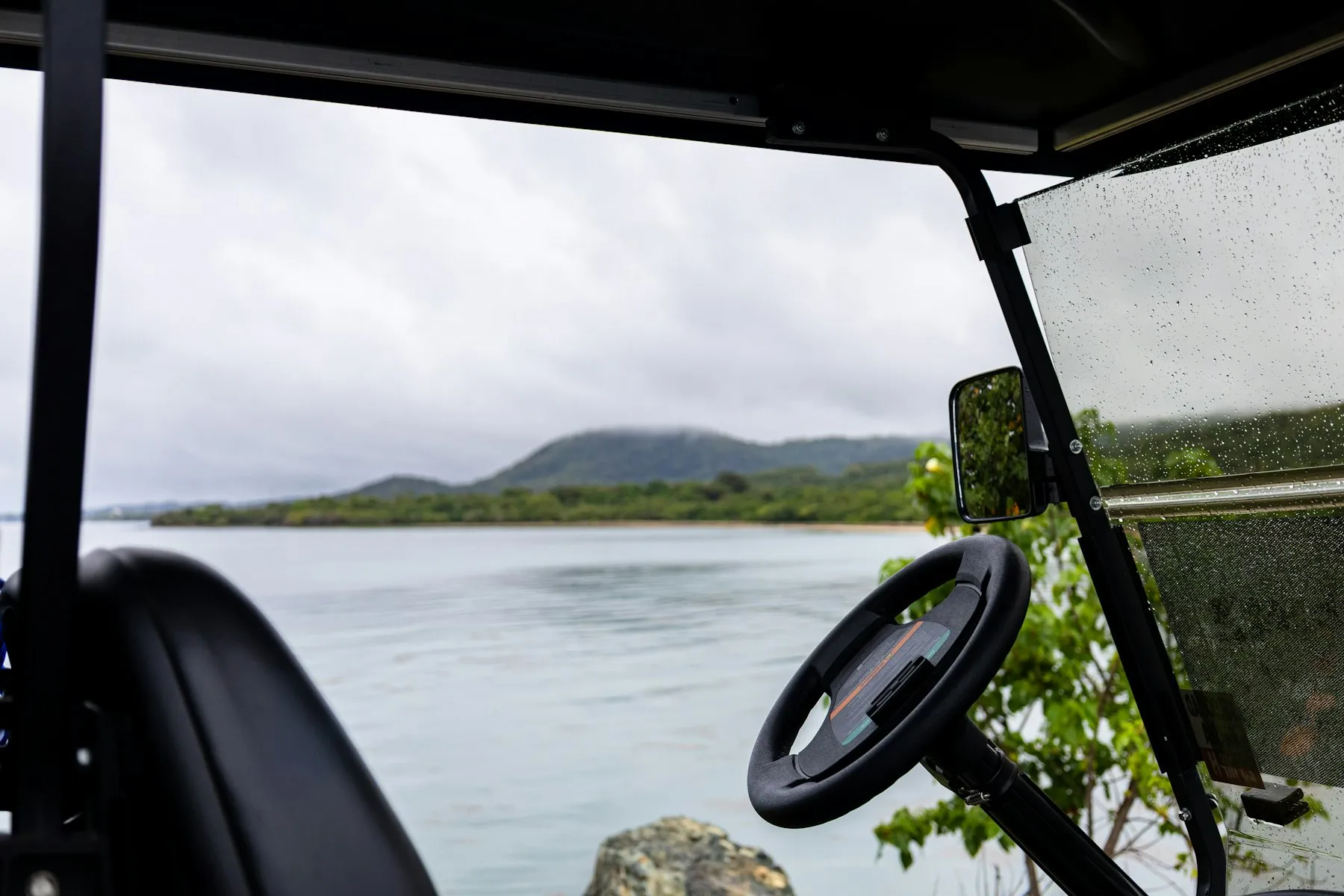
Best golf cart mirrors: folding side mirrors and 5-panel rearviews
A cart has no rear window and the roof blocks what a car mirror would show, so the first time you back out of a cart garage onto a path you understand why mirrors come up. These are the ones that fit, by strut size, and what the rules ask for.
Best picks · 5 picksUpdated Nov 5, 2026